Who I am
My name is Stephanie Bennett, and I am a Licensed Professional Counselor (LPC) based in Erie, PA, providing individual telehealth therapy to adults across Pennsylvania.
Inner North Counseling is my private practice, created for individuals who feel overwhelmed, stuck, or disconnected from themselves. Many of the clients I work with are navigating anxiety, burnout, self-doubt, relationship issues, or significant life transitions and are seeking a more grounded and meaningful way forward.
In our work together, we focus on understanding patterns, feeling more emotionally grounded, and strengthening inner trust—so you can move through life with greater clarity, confidence, and ease.
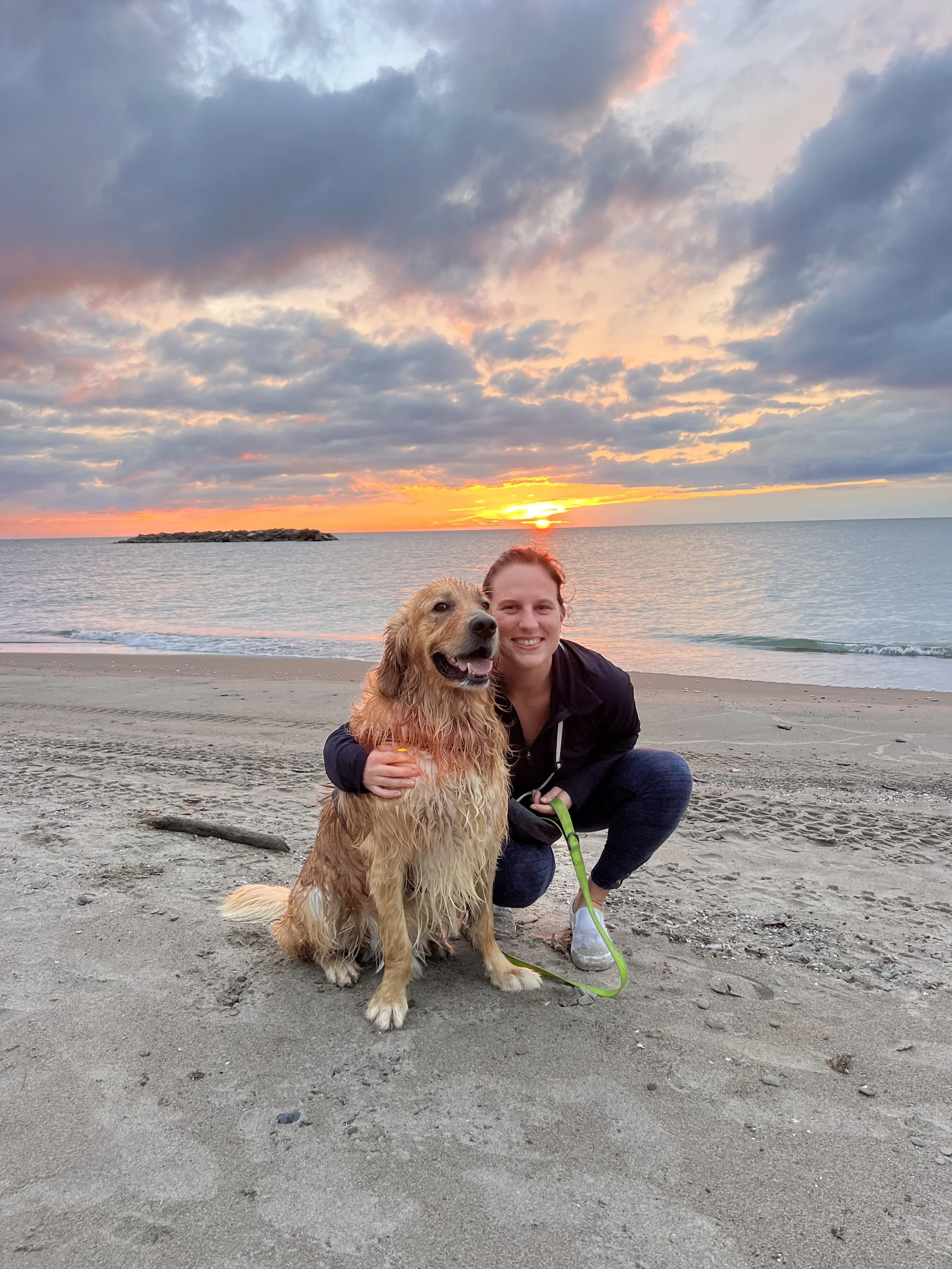
Outside of therapy, I’m an animal lover and enjoy spending time outdoors and traveling. My two golden retrievers and cats are an important part of my life and may occasionally make an appearance during sessions.


My background & experience
During my time as a therapist, I have worked with children, adolescents, and adults across a variety of clinical settings, including in-home therapy, community outpatient mental health, mobile therapy, and school-based services. Through this work, I supported individuals, couples, and families navigating anxiety, emotional regulation challenges, relational stress, trauma, and major life transitions.
Much of my work today focuses on supporting adults in individual therapy, where there is space for deeper exploration of emotional patterns, attachment experiences, identity, and self-trust. Over time, I found this work to be especially meaningful, as it allows for a collaborative, relational approach that aligns closely with how I naturally work in session—thoughtfully, attuned, and at a pace that feels supportive.
I earned my Master’s degree in Clinical Mental Health Counseling in February 2021 and continue to engage in ongoing learning and consultation to deepen my trauma-informed, attachment-focused, and relational approach. I believe meaningful change doesn’t happen through quick fixes, but through experiences of understanding, emotional safety, and a strong therapeutic relationship.
My goal is to offer a space where you feel supported enough to explore what lies beneath the surface, deepen your relationship with yourself, and move toward more meaningful and aligned connections with others.
My Approach
My approach to therapy is integrative, relational, and trauma-informed. I believe emotions are not something to be feared or fixed—they carry important information about our needs, boundaries, and experiences. Therapy can be a place to better understand your emotional world, build trust in yourself, and relate to your experiences in more supportive ways.
While I draw from several evidence-based approaches, the therapeutic relationship itself is central to the work. Sessions are informal, collaborative, and guided by you, with care taken to move at a pace that feels safe and supportive.
Depending on your needs, I may draw from several approaches, including:
Acceptance and Commitment Therapy (ACT)
ACT focuses on helping you change how you relate to difficult thoughts and emotions rather than trying to eliminate them. In sessions, I use ACT to help you relate differently to distressing experiences (such as anxiety or self-criticism), clarify what matters most to you, and take meaningful steps forward—even when emotions feel uncomfortable.
Parts-based work
Parts-based work explores different “parts” of yourself, such as an inner critic, people-pleasing part, or protective part. These parts often developed for good reasons. Together, we work to understand them with curiosity and compassion rather than judgment, helping reduce shame and create more internal balance.
EMDR & trauma-informed approaches
EMDR is a trauma-based approach that helps process past experiences that may still be influencing how you feel, think, or respond in the present. Trauma can include single events, ongoing stress, or relational experiences. I use EMDR thoughtfully and with preparation, always prioritizing safety, consent, and pacing. Even when EMDR is not being used directly, my work is always trauma-informed.
A relational and attachment-focused perspective
My work is grounded in attachment theory and the belief that the therapeutic relationship itself plays an important role in healing. Attachment patterns shape how we experience closeness, trust, and emotional safety. When attachment wounds occur, they can show up later as anxiety in relationships, people-pleasing, emotional shutdown, or difficulty trusting yourself or others.
Through a consistent, supportive, and attuned therapeutic relationship, therapy can offer a corrective emotional experience—one that supports greater emotional safety, self-understanding, and new ways of relating over time.
You don’t need to know which approach is right—my role is to help guide that process with you.
If you’re curious about working together, I invite you to take the next step.